
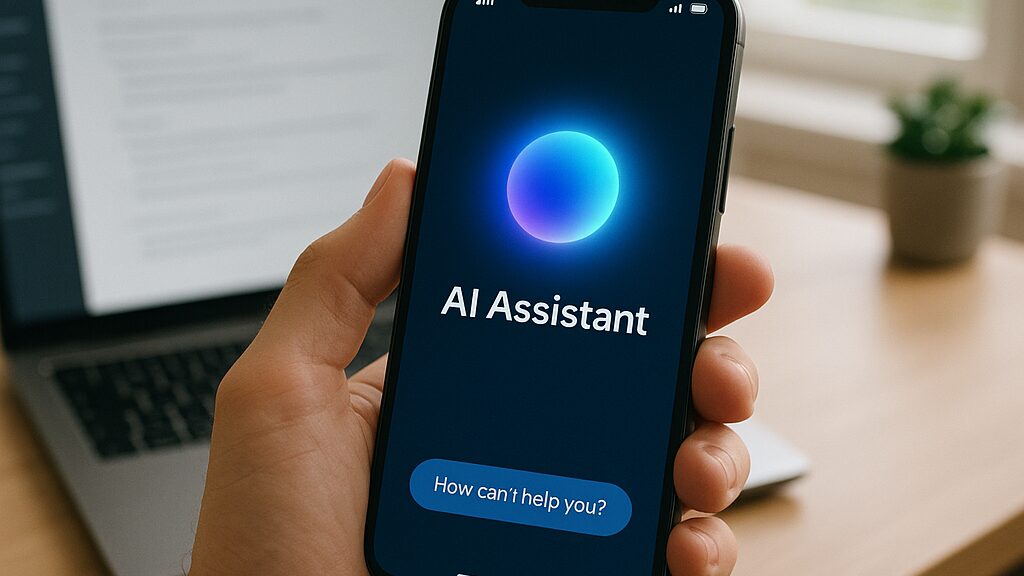
Since the emergence of search engines, SEO (Search Engine Optimization) has been the central pillar of any online visibility strategy. But since the advent of generative artificial intelligence tools like ChatGPT, Gemini, and Perplexity, a new paradigm has taken hold: GEO, or Generative Engine Optimization. Both disciplines share a common goal, being visible and reaching qualified audiences, but they operate according to profoundly different logics. Understanding their similarities, their differences, and their complementarity is now essential for any business wishing to maintain its digital presence.
What is SEO? A fundamental reminder
SEO, or search engine optimization, refers to all the techniques aimed at improving a website’s ranking in the organic results of search engines like Google or Bing. It rests on three classic pillars: content, technical performance, and authority (or netlinking).
- Content: producing relevant, well-structured texts rich in targeted keywords.
- Technical performance: ensuring the site is fast, accessible, well-structured, and crawlable by search engine bots.
- Authority: earning quality inbound links (backlinks) from other recognized sites.
SEO is a mature discipline, with well-established standards, powerful tools (SEMrush, Ahrefs, Google Search Console), and a worldwide community of practitioners. It generates sustainable and measurable organic traffic, making it a profitable long-term investment.
What is GEO? The new frontier of search optimization
GEO, or Generative Engine Optimization, is an emerging discipline that involves optimizing content so that it is cited, summarized, or recommended by generative search engines and AI assistants. Unlike SEO, which aims to appear in a list of blue links, GEO seeks to have your content integrated into a direct response generated by an AI.
In practice, when a user asks a question to ChatGPT, Perplexity, or Google SGE (Search Generative Experience), the AI synthesizes information from multiple sources to formulate a coherent response. GEO aims to be among the sources cited or paraphrased in that final response.
How does a generative engine work?
Generative engines do not index the web in the same way as traditional search engines. They rely on language models trained on vast data corpora, sometimes supplemented by real-time search. They evaluate the credibility, clarity, and relevance of sources to decide which content to incorporate into their responses.
- They favor content that is clear, factual, and well-structured.
- They prefer sources recognized as authoritative in their field.
- They synthesize information rather than simply returning links.
- They respond to conversational intent, not solely to keyword-based queries.
The key differences between GEO and SEO
Although both disciplines target online visibility, their mechanisms, success metrics, and strategic approaches differ considerably.
The format of visibility
In SEO, visibility is measured by a ranking on a results page (SERP): appearing in position 1, 2, or 3 on Google is the ultimate goal. In GEO, visibility takes the form of a citation within a generated response. Your brand or content may be mentioned without the user ever clicking through to your site, which radically transforms the notion of traffic and conversion.
Search intent
SEO works with specific keywords, often short-tail or long-tail, with a clearly defined intent (informational, transactional, navigational). GEO, on the other hand, responds to questions phrased in natural language, often complex and conversational. AI users ask questions as they would speak to an expert, and content must be written accordingly.
Trust signals
In SEO, authority is built primarily through backlinks. In GEO, trust relies more on a brand’s overall reputation, the consistency of its expertise across different platforms (Wikipedia, specialized forums, online press, social media), and the factual clarity of its content. AIs draw on diffuse, qualitative signals rather than a single indicator like PageRank.
Measuring results
SEO has very precise measurement tools: organic traffic, click-through rates, keyword rankings, conversions. GEO is still in a developmental phase when it comes to analytical tools. It is difficult to know exactly how many times your content has been cited by an AI, which represents a major challenge for digital marketing professionals.
Why has GEO become so important?
The rise of generative AI in users’ search habits is a rapid and profound phenomenon. According to several recent studies, a growing share of users prefer to query an AI rather than browse through multiple pages of Google results. This behavioral shift has direct consequences for traditional organic traffic.
- Some sites have seen a drop in organic traffic despite strong SEO rankings, due to direct AI responses that keep users on the results page.
- Brands not cited by AIs become invisible to an ever-growing portion of their potential audience.
- Younger generations, particularly those aged 18 to 35, are massively adopting AI assistants as their first point of informational contact.
- High-commercial-potential queries are increasingly intercepted by generative responses before they even reach classic organic results.
Ignoring GEO today means risking the loss of a considerable market share in the years ahead. Companies that anticipate this paradigm shift will be the ones that dominate digital visibility tomorrow.
GEO and SEO: an indispensable complementarity
It would be a mistake to view GEO as a replacement for SEO. The two approaches are complementary and mutually reinforcing. Good SEO contributes to GEO, and vice versa.
Indeed, generative AIs often rely on well-ranked content to fuel their responses. An article that ranks well on Google is more likely to be indexed and used by an AI. Likewise, being cited by an AI can generate brand awareness and indirectly increase direct searches on Google.
Best practices common to both disciplines
- Produce high-quality, factual, well-structured content that is regularly updated.
- Use verifiable data, statistics, and credible sources.
- Answer precisely the questions users are asking.
- Structure content with clear headings, lists, and short paragraphs.
- Build brand awareness across multiple channels (press, social media, forums).
Practices specific to GEO
- Adopt a conversational and direct writing style, close to natural language.
- Integrate clear answers from the very first paragraphs, without burying information in overly long introductions.
- Develop a presence on platforms recognized by AIs as reliable sources (Wikipedia, specialized media, sector-specific databases).
- Structure content with structured data markup (schema.org) to make it easier for algorithms to understand.
- Build a recognizable and consistent expert identity across all communication channels.
How to integrate GEO into your digital strategy?
Adopting GEO does not mean starting from scratch. It is more about enriching and adapting your existing content strategy to meet the requirements of generative engines. Here is a progressive approach to integrating GEO without sacrificing your SEO gains.
- Audit your existing content to identify pieces that answer specific questions and optimize them in a conversational format.
- Create FAQ-style content that naturally aligns with the queries users submit to AI tools.
- Develop your editorial authority by regularly publishing analyses, case studies, and comprehensive guides in your field.
- Work on your online reputation by encouraging reviews, mentions, and shares on recognized third-party platforms.
- Monitor the evolution of GEO tools that are gradually emerging, such as features for tracking citations in AI responses.
Conclusion: anticipate to stay visible
The search landscape is undergoing a profound transformation. SEO remains a solid and indispensable foundation of any online visibility strategy, but it is no longer sufficient on its own to guarantee a complete presence in a digital ecosystem increasingly dominated by artificial intelligence. GEO represents the next natural step in digital optimization, a logical evolution at a time when users are delegating their information searches to ever more sophisticated AI assistants. Businesses and content creators who understand this duality, and who adapt their strategy accordingly, will be the best positioned to capture the attention of their audiences, both today and tomorrow.